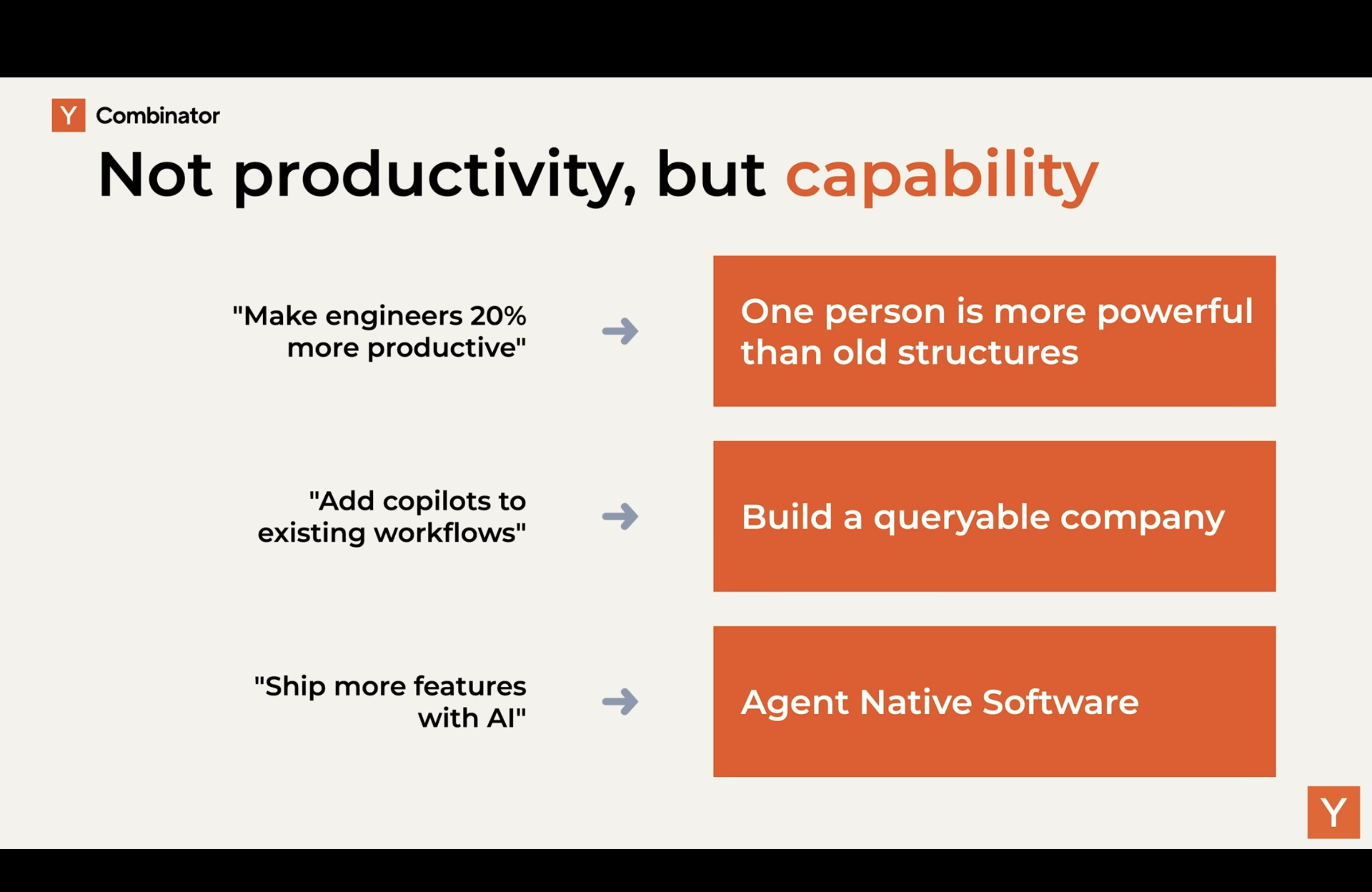
Wrong framing: AI as a productivity tool.
Right framing: AI as an operating system.
In short: if every process, decision, and outcome is recorded inside a closed loop, the company becomes queryable by AI. The difference isn't how much AI you use - it's how it's architected around the workflows. The point isn't productivity, but capability: what becomes possible to do that wasn't before.
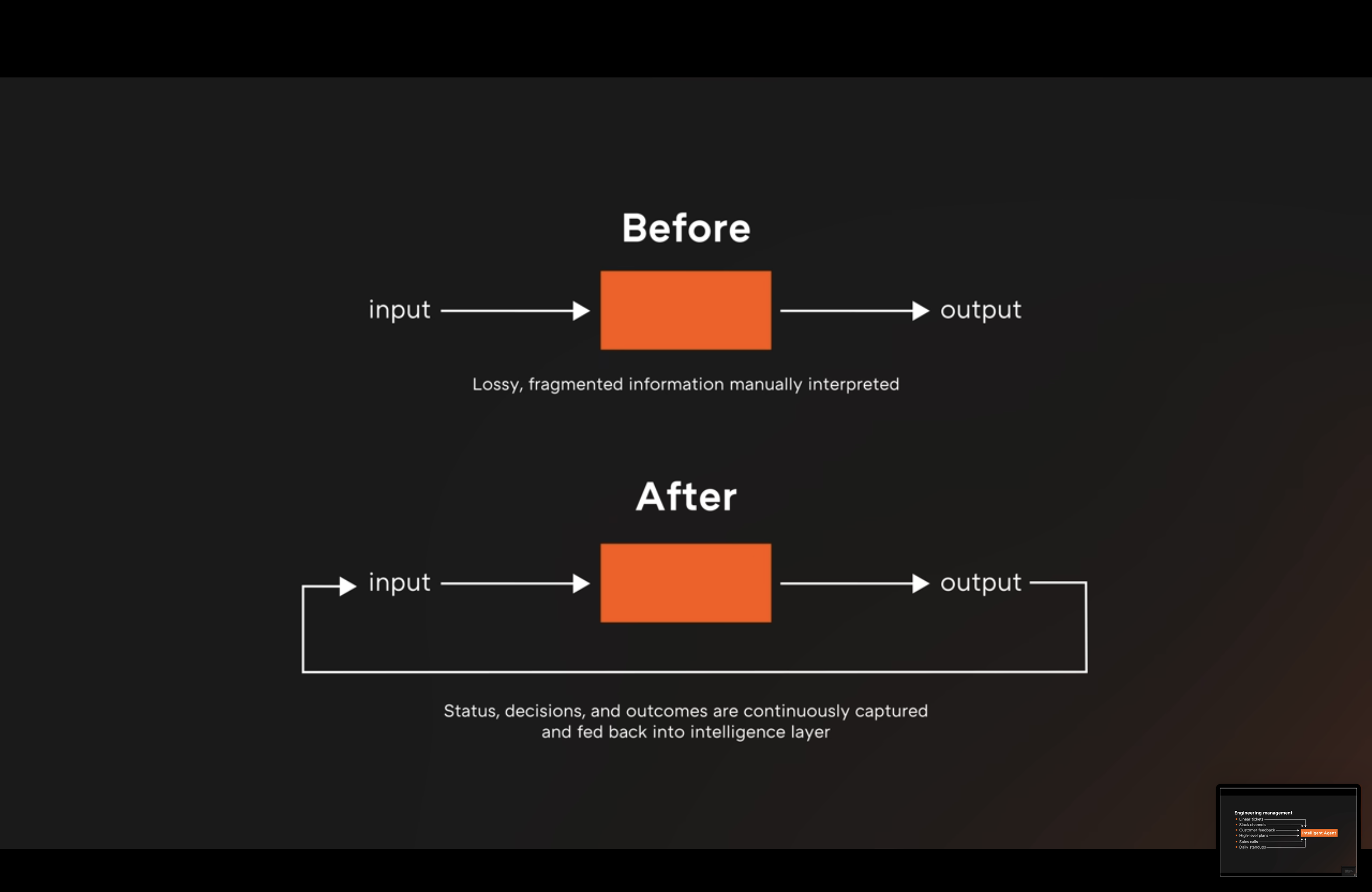
Open loop vs closed loop
Open loop: you take an input, produce an output, done. Information is fragmented, scattered across DMs, emails, standups. No one has the full picture.
Closed loop: every action leaves a structured trace, that trace feeds an intelligent layer, the layer improves the processes. Status, decisions, and outcomes stay in the loop - they don't get lost.
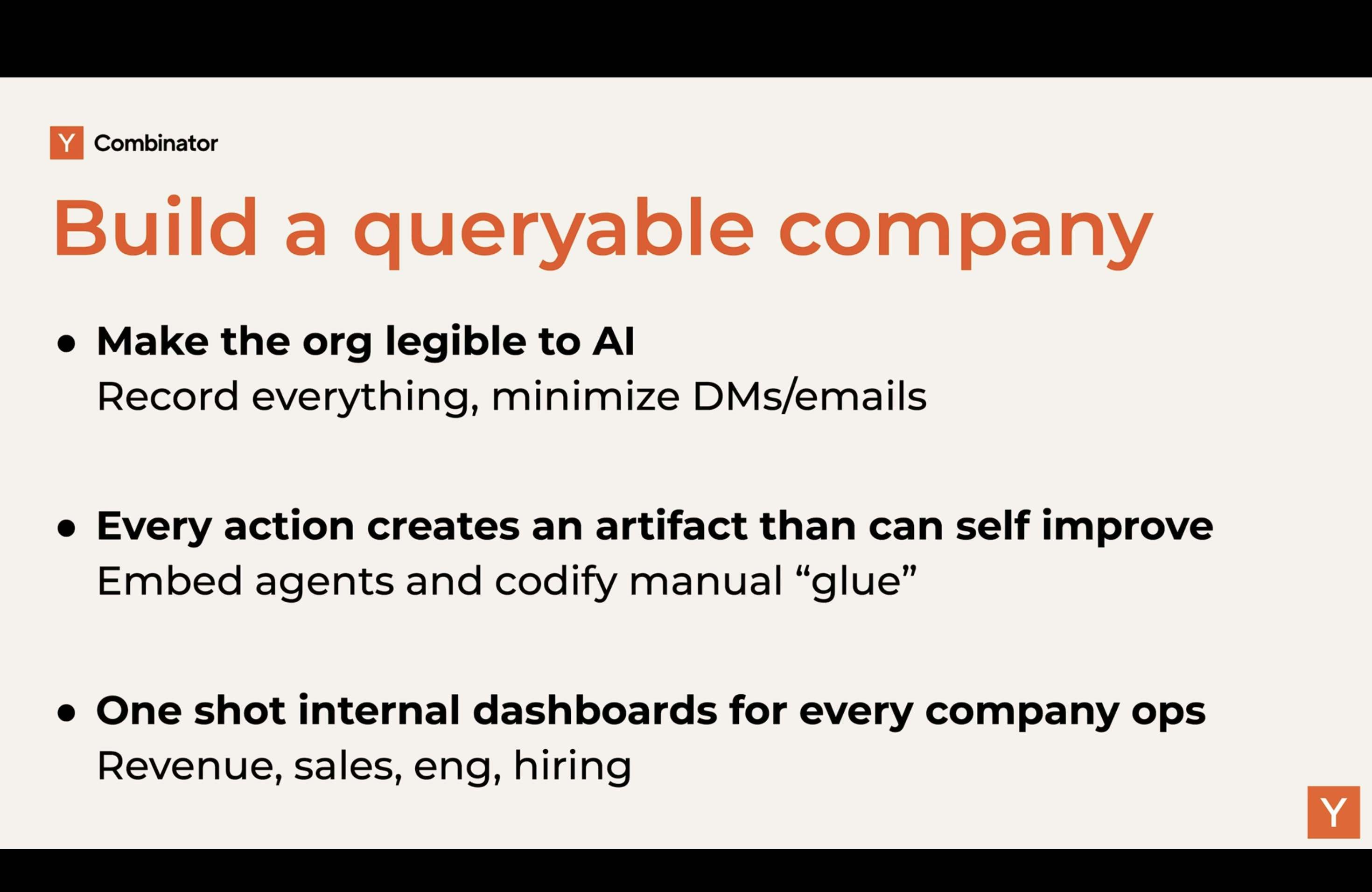
How to build a "queryable" company
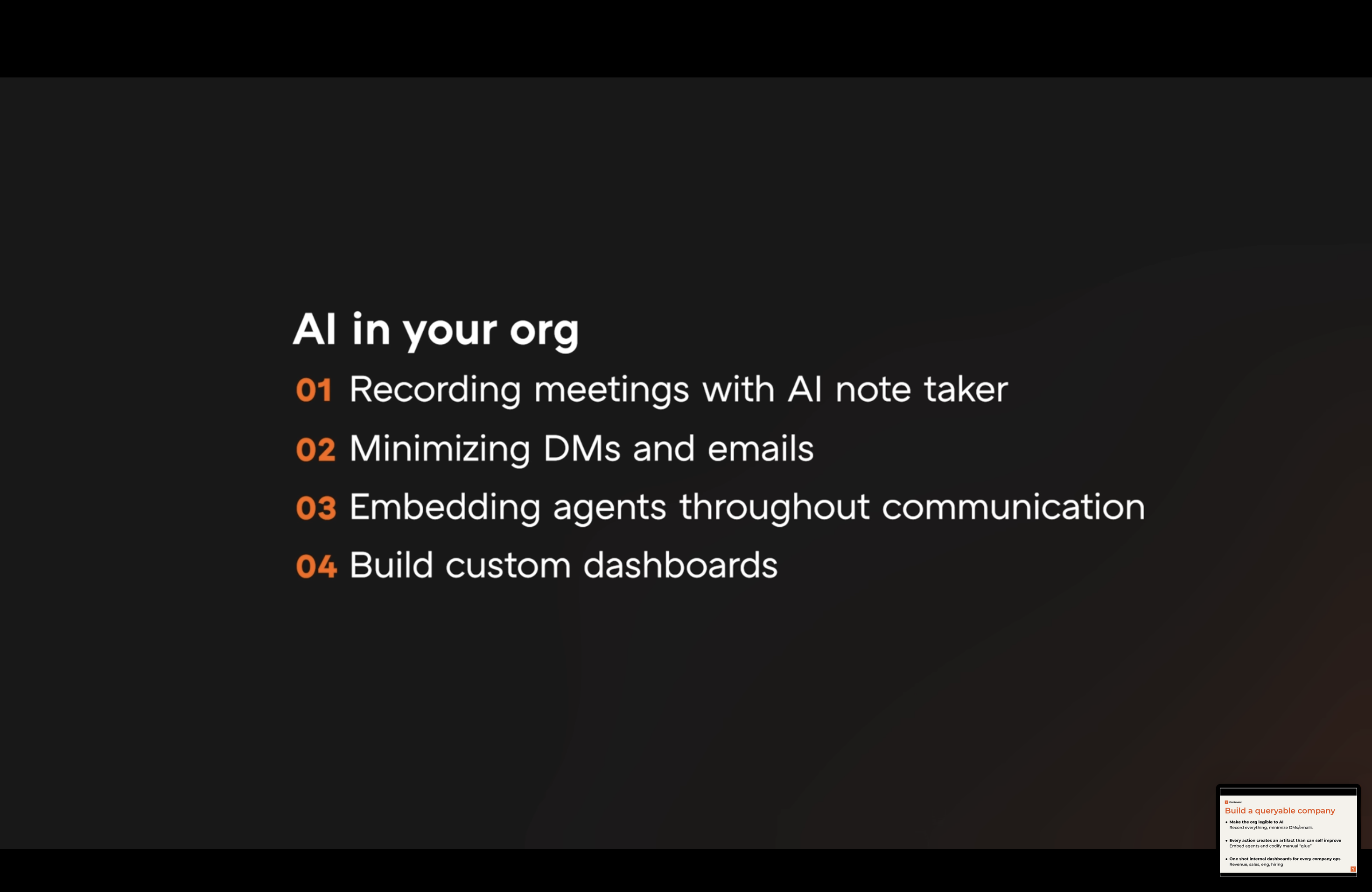
For this to work, the company has to be readable by AI. In practice:
- Record meetings (AI note taker)
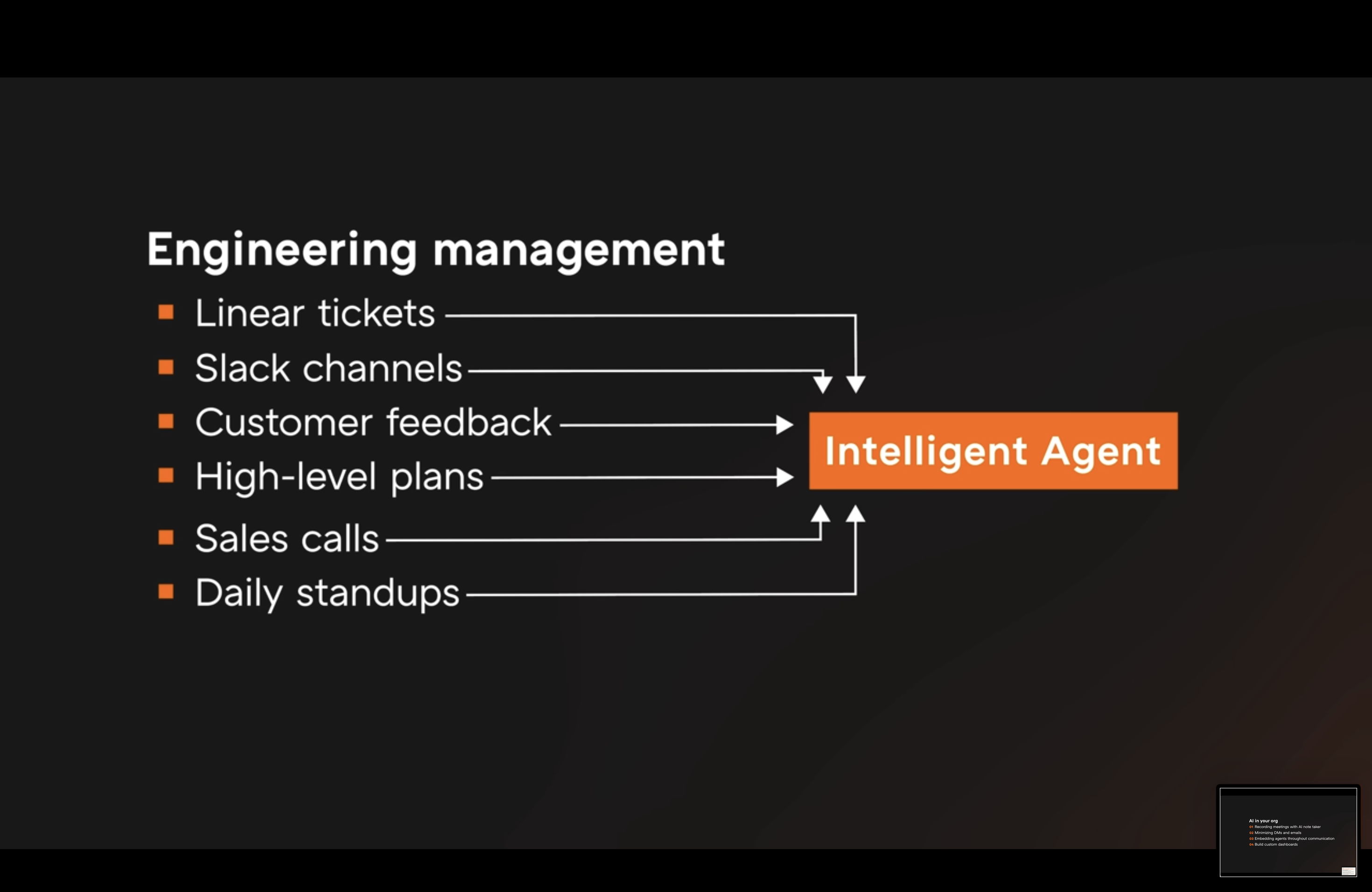
- Minimize DMs and emails - everything goes into trackable channels
- Insert agents into communication flows
- Build custom dashboards for each function (revenue, eng, sales, hiring)
The goal is to give agents the same context you'd give a new colleague. If it has that, it can become proactive - not just execute, but suggest what to do and build next.
How the way we build software changes
Whoever decides what to build writes the specs and tests that define success. The AI writes the code and iterates until the tests pass. Whoever decides what to build judges the output. It's not AI replacing you - it's a completely different division of labor.
Note: two days ago Anthropic published "When AI builds itself" - it's worth reading. The person who writes the code disappears, and it opens up three very different future scenarios.
The traditional hierarchy no longer makes sense
Middle management has always existed to circulate information up and down. If the company is queryable, that flow isn't needed anymore. A company's speed depends on how fast information moves - not on how many people you have.
Jack Dorsey is already redesigning roles around three figures:
The IC (individual contributor) - a deep specialist in a specific layer. Builds and operates. Doesn't wait for instructions from above because the system provides the context they need to decide on their own.
The DRI (directly responsible individual) - owns a specific problem, with full authority to pull resources from different teams. It's not a permanent role: it moves where it's needed.
The player-coach - replaces the traditional manager. Keeps doing the real work (writing code, building, designing) and invests in the growth of the people around them. Doesn't run status meetings, doesn't do alignment - the system handles that.
No role exists just to move information around.
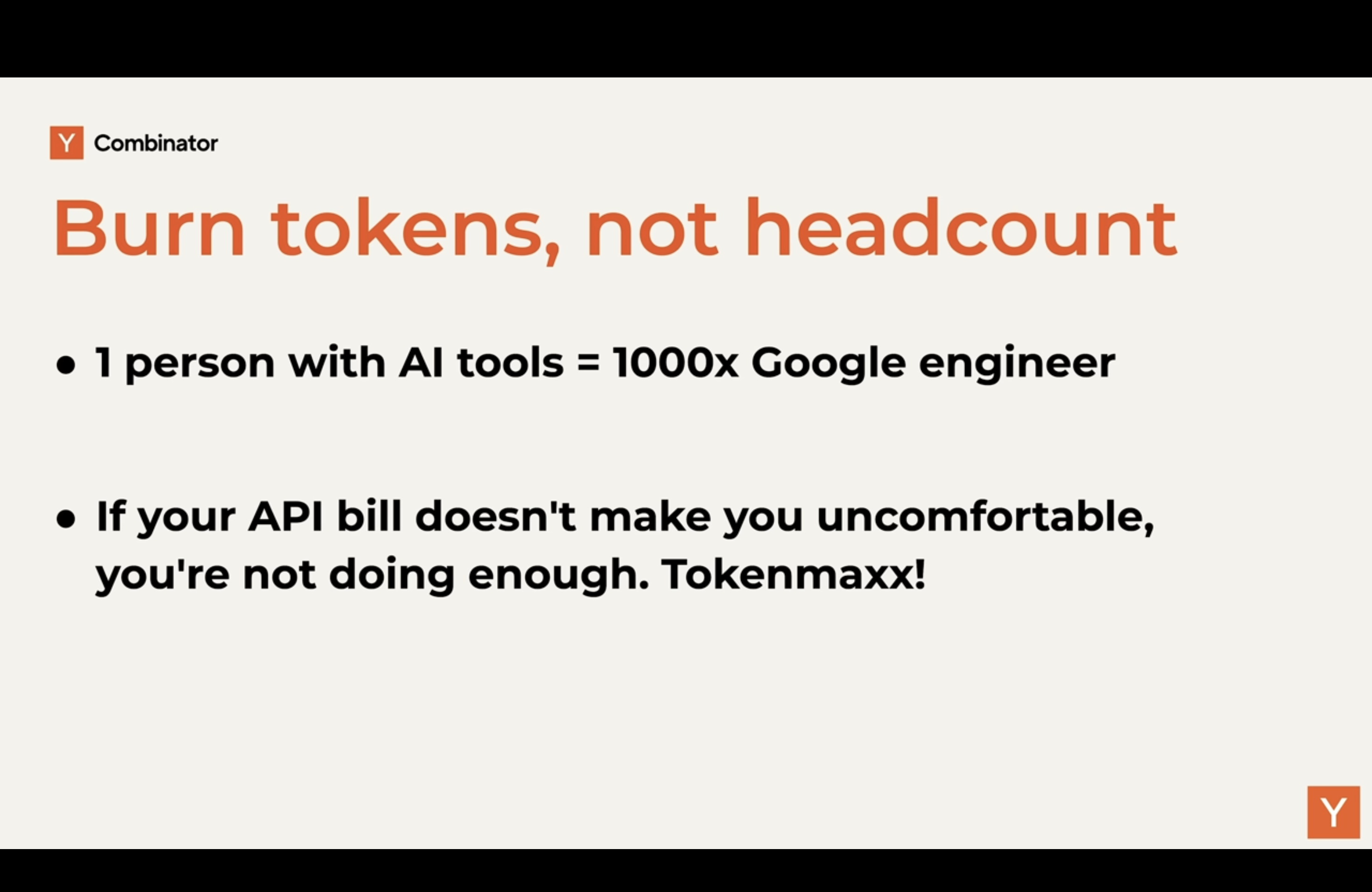
Burn tokens, not headcount
A metric that's become very popular recently for evaluating an AI-native startup is its token consumption as a measure of productivity. Plenty of people make memes about their AI bills. So the focus isn't how many people you have - it's how much AI you're actually using. "Tokenmaxxing" means maximizing AI usage instead of hiring: spending on compute, not on headcount. OpenAI invested $2M in API credits across all the YC startups that adopt this approach.
Startups have the biggest advantage: no legacy systems, no structure to dismantle. You can build this way from day 1.
Sources:
YC Startup Library - The Playbook for Building an AI Native Company (Diana Hu)
Block - From Hierarchy to Intelligence
Anthropic Institute - Recursive Self-Improvement